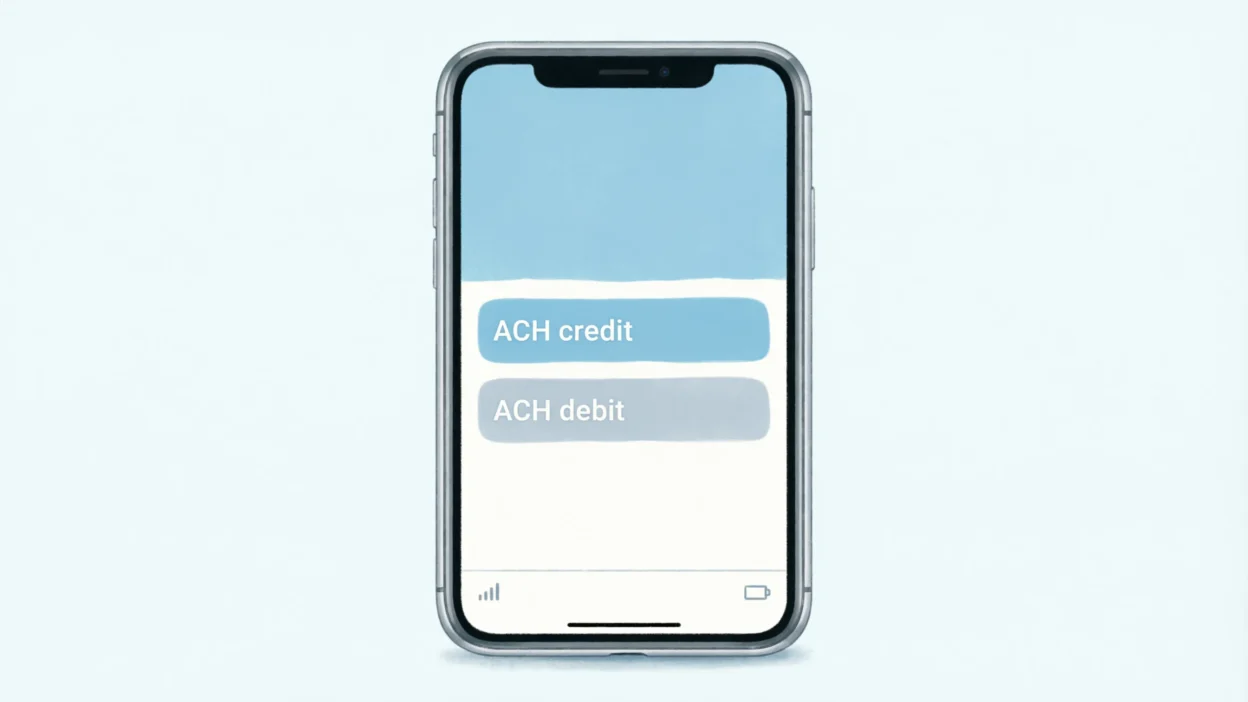
You’re checking your bank app late at night, scrolling through recent transactions, when you spot something confusing: “ACH CREDIT” or “ACH DEBIT.”
No emoji. No explanation. Just three letters.
You might screenshot it, send it to a friend, or even Google it thinking, “did I get paid or did money just leave my account?”
If you’ve ever seen ACH in a banking app, payment notification, payroll message, or online chat about money and felt unsure, you’re not alone. This term shows up everywhere in modern digital banking, yet few people clearly explain it in plain English.
Let’s fix that.
Quick Answer:
ACH in banking means Automated Clearing House, a system used to move money electronically between bank accounts in the U.S.
What Does ACH Mean in Banking?
ACH stands for Automated Clearing House.
In plain English, ACH is a secure electronic system that banks use to send and receive money without using cash, checks, or wire transfers. It works quietly in the background to process everyday payments.
When you see ACH on your bank statement, it usually means:
- money was deposited into your account (ACH credit), or
- money was withdrawn from your account (ACH debit)
Why People and Banks Use ACH
ACH is popular because it’s:
- safe
- Low cost
- automatic
- ideal for repeat payments
Employers, businesses, and individuals use it for payroll, bills, subscriptions, and online transfers.
Example sentence:
“my paycheck showed up as an ach credit this morning.”
👉 Bold summary: ACH means an electronic bank to bank money transfer processed through the Automated Clearing House network.
How the ACH System Works
ACH isn’t instant like sending a text, but it’s reliable.
Here’s a simple breakdown:
- a request is made (payroll, bill, transfer)
- banks group these requests together
- the ach network processes them in batches
- money moves between accounts
Most ACH transfers take 1 3 business days, though some banks now offer same day ACH.
Where You Commonly See ACH Used
ACH isn’t slang, but it shows up often in digital conversations about money.
You’ll commonly see it in:
- banking apps
- online bank statements
- payroll notifications
- payment confirmation emails
- Finance related group chats
- customer support messages
- online forums about money
Tone of Use
- neutral
- formal to semi asual
- mostly informational, not expressive
People don’t use ACH to joke or react it’s used to describe how money moved.
Realistic Conversation Examples Using ACH
Here are natural, modern chat style examples you might see online or in messages:
- “just got my ach deposit from work 🙌”
- “that ach debit is my rent payment”
- “is this ach transfer from you or the bank?”
- “they pay freelancers through ach now”
- “my refund came as an ach credit”
- “ach takes longer than zelle usually”
- “the gym pulls fees via ach every month”
- “i set up ach for autopay bills”
All lowercase, casual, and realistic just like real online chats.
ACH Credit vs ACH Debit (Important Difference)
This part matters a lot.
ACH Credit
- money is added to your account
- examples: salary, tax refund, reimbursement
ACH Debit
- money is taken from your account
- examples: utility bills, subscriptions, rent
If you ever see an ACH debit you don’t recognize, it’s smart to contact your bank.
When to Use ACH (and When Not To)
✅ Use ACH When:
- paying bills automatically
- receiving payroll
- transferring money between banks
- setting up subscriptions
- sending large amounts without urgency
❌ Don’t Use ACH When:
- you need instant payment
- sending money internationally
- making emergency transfers
- paying someone who doesn’t accept bank transfers
Small Comparison Table
| context | example phrase | why it works |
| payroll | “salary paid via ach” | standard and reliable |
| rent | “rent pulled as ach debit” | common monthly use |
| urgent payment | “need ach now” | ach isn’t instant |
| international | “sending ach overseas” | ach is u.s. only |
Similar Terms and Alternatives to ACH
ACH is just one way money moves. Here are common alternatives:
Wire Transfer
- faster, often same-day
- higher fees
- used for large or urgent payments
Zelle
- instant transfers
- Peer to peer
- linked to bank accounts
Venmo / PayPal
- casual payments
- social and mobile-focused
- not true bank transfers
Direct Deposit
- actually uses ACH
- Employer to employee payments
EFT (Electronic Funds Transfer)
- umbrella term
- includes ACH, wires, and others
Tip: ACH is slower but cheaper and more stable than most alternatives.
Why ACH Is So Important in Modern Banking
ACH quietly powers:
- paychecks
- tax refunds
- loan payments
- subscriptions
- government benefits
Without ACH, most automatic payments would require checks or manual action.
It’s not flashy but it’s essential.
Common ACH Fees and Safety
Most ACH transfers:
- are free for consumers
- have low fees for businesses
ACH is also:
- regulated
- encrypted
- protected by banking laws
That said, always monitor your account for unknown ACH debits.
FAQs About ACH in Banking
1. does ach mean i got paid?
If it says ACH credit, yes money came in.
2. is ach safe?
Yes. ACH is one of the safest electronic payment systems used by banks.
3. how long do ach transfers take?
Usually 1 3 business days, sometimes same day.
4. can ach be reversed?
ACH debits can sometimes be disputed, but credits are harder to reverse.
5. is ach used worldwide?
No. ACH is mainly used in the United States.
6. is ach the same as direct deposit?
Direct deposit uses ACH, but ACH covers more than payroll.
7. why do i see ach instead of a name?
Some banks show the payment method instead of the sender.
Final Thought
So, what does ACH mean in banking?
It’s simply the behind the scenes system that moves your money electronically, making modern banking smooth, automatic, and reliable.
If it’s your paycheck, rent, or monthly subscription, ACH is doing the quiet work no cash, no checks, no stress.
Once you understand it, those three letters won’t feel confusing anymore.