The first time you see “no kings protest” online, it can feel confusing. Maybe it pops up in a tweet, a comment under a viral video, or a group chat where people are talking fast and assuming everyone already knows. You pause, reread it, and wonder: Is this about history? Politics? A meme?
That’s exactly how many people encounter the term today through short posts, trending hashtags, or quick texts. In a world where big ideas get squeezed into small phrases, “no kings protest” is one of those expressions that carries a lot of meaning in just three words. Let’s break it down in a simple, clear, and relatable way.
Quick Answer:
“No kings protest” means a protest or movement that rejects rule by one powerful leader and supports equality, democracy, and people having a voice.
What Does “No Kings Protest” Mean in Simple Words?
The phrase no kings protest does not stand for a texting abbreviation or acronym. It’s a political and social slogan.
Plain-English meaning
At its core, “no kings” means no one person should rule over everyone else like a king. The protest part means people are publicly showing disagreement with systems, leaders, or actions that feel authoritarian, unfair, or too powerful.
So together, no kings protest means:
- people protesting against absolute power
- rejecting the idea of one ruler above the law
- supporting democracy, equality, and shared power
Why people use it
People use this phrase to:
- criticize leaders who act like they are above rules
- support democratic values
- connect modern protests to historical ideas of freedom
- send a strong message in a short, catchy way
Short example sentence
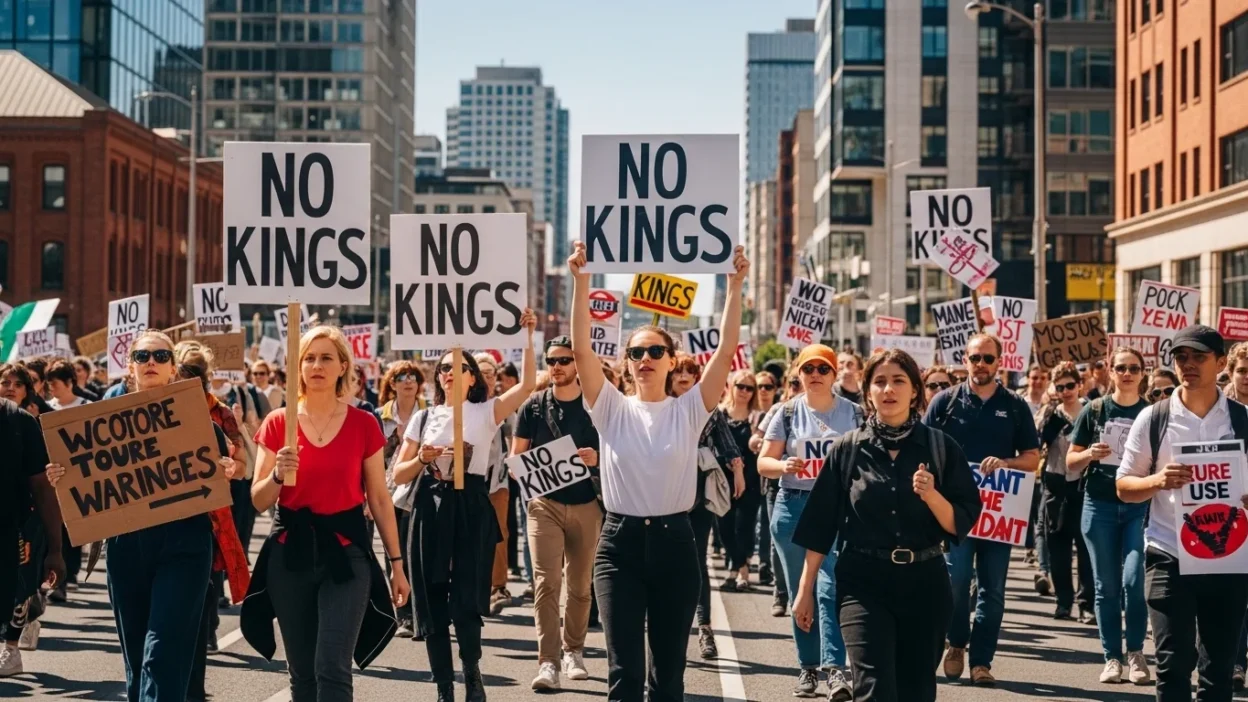
“people filled the streets chanting no kings protest slogans during the rally.”
Bold summary:
No kings protest means standing against absolute power and supporting equal rule and democracy.
Where Is “No Kings Protest” Commonly Used?
You’ll mostly see this term in online and public spaces, not formal writing.
Common places you’ll find it
- social media posts (twitter/x, instagram, tiktok)
- hashtags during protests or political events
- comment sections on news videos
- online forums and discussion threads
- group chats about politics or activism
Tone of the term
- tone: informal to neutral
- style: direct, bold, activist friendly
- not formal (rarely used in academic or official documents)
It fits modern texting culture and social media slang, even though it’s not slang in the traditional sense.
Realistic Conversation Examples
Here are 9 natural, lowercase chat style examples showing how people actually use it online:
- “did you see the march today? total no kings protest vibes.”
- “this feels like another no kings protest moment tbh.”
- “people are tired of leaders acting untouchable. no kings protest energy.”
- “the signs all said no kings protest. powerful stuff.”
- “it’s not about parties, it’s about no kings protest ideals.”
- “that speech just triggered a whole no kings protest response online.”
- “no kings protest isn’t anti-country, it’s pro people.”
- “history repeats itself. no kings protest all over again.”
- “i’m seeing no kings protest posts everywhere today.”
When to Use and When Not to Use “No Kings Protest”
Like many political phrases, context matters.
✅ When to use it
- talking about protests or movements
- discussing power, democracy, or leadership issues
- commenting on authoritarian behavior
- explaining protest slogans or signs
- social media discussions about civic rights
❌ When not to use it
- casual chats with no political context
- formal business or professional emails
- situations where neutrality is required
- joking contexts where meaning could be misunderstood
Quick comparison table
| context | example phrase | why it works / doesn’t |
| protest discussion | “this march is a no kings protest” | clear and accurate |
| social media comment | “no kings protest energy here” | casual and expressive |
| work email | “we support no kings protest ideas” | too political for work |
| random joke | “no kings protest lol” | may seem insensitive |
Similar Terms and Alternatives You Might See
Here are related phrases with similar meaning, often used in the same online chat or social media spaces:
| term | meaning | when to use |
| anti-authoritarian | against strict control or power | formal discussions |
| power to the people | people should govern | protest slogans |
| anti-monarchy | against kings or royal rule | historical or political talk |
| democracy movement | support for democratic systems | news or activism |
| resist tyranny | fight unfair control | serious political context |
| anti-dictator protest | against one-person rule | global politics |
Each phrase carries a slightly different tone, but no kings protest stands out because it’s short, emotional, and easy to chant or post.
Frequently Asked Questions (FAQ)
1. Is “no kings protest” slang?
Not exactly. It’s more of a political slogan than texting slang, but it’s often used in informal online chats.
2. Does it literally mean hating kings?
No. It’s usually symbolic, meaning opposition to absolute power, not literal kings.
3. Is the term new?
The idea is old, but the phrase is popular again because of modern protests and social media.
4. Is it used by a specific age group?
It’s most common among young adults and activists, especially on social platforms.
5. Can it be misunderstood?
Yes. Without context, some people may think it’s about monarchy only, not broader power issues.
6. Is it offensive?
Generally no, but it can be politically sensitive, depending on the audience.
7. Can I use it in a school assignment?
Only if the topic is political or historical and the tone allows informal phrases.
Why “No Kings Protest” Matters in Digital Communication
In today’s texting culture and online chat meaning, short phrases carry big ideas. “No kings protest” works because it:
- connects history with modern issues
- fits easily into posts, signs, and comments
- signals values quickly without long explanations
It shows how language evolves in social media slang spaces, even when the message itself is serious.
Final Thought
No kings protest is a powerful phrase that means rejecting absolute power and supporting equality, democracy, and shared rule. You’ll mostly see it in protests, social media posts, and online discussions where people speak openly and informally.
Understanding it helps you follow conversations, avoid confusion, and better understand modern digital activism. In a fast moving online world, knowing what phrases like this mean keeps you connected and informed.