imagine you are watching a short science video online and someone in the comments says the parietal lobe helps your brain understand touch and space. you pause the video and wonder what that actually means.
maybe you also saw the term during a biology class discussion or in a chat about how the brain works. the human brain has many parts and each one plays a special role. when people first hear the term parietal lobe it can sound complex or confusing.
that is why many curious readers search what does the parietal lobe do and how this brain area affects everyday life.
quick answer: the parietal lobe is the part of the brain that processes touch sensations and helps you understand where your body is in space.
what does the parietal lobe do in simple terms
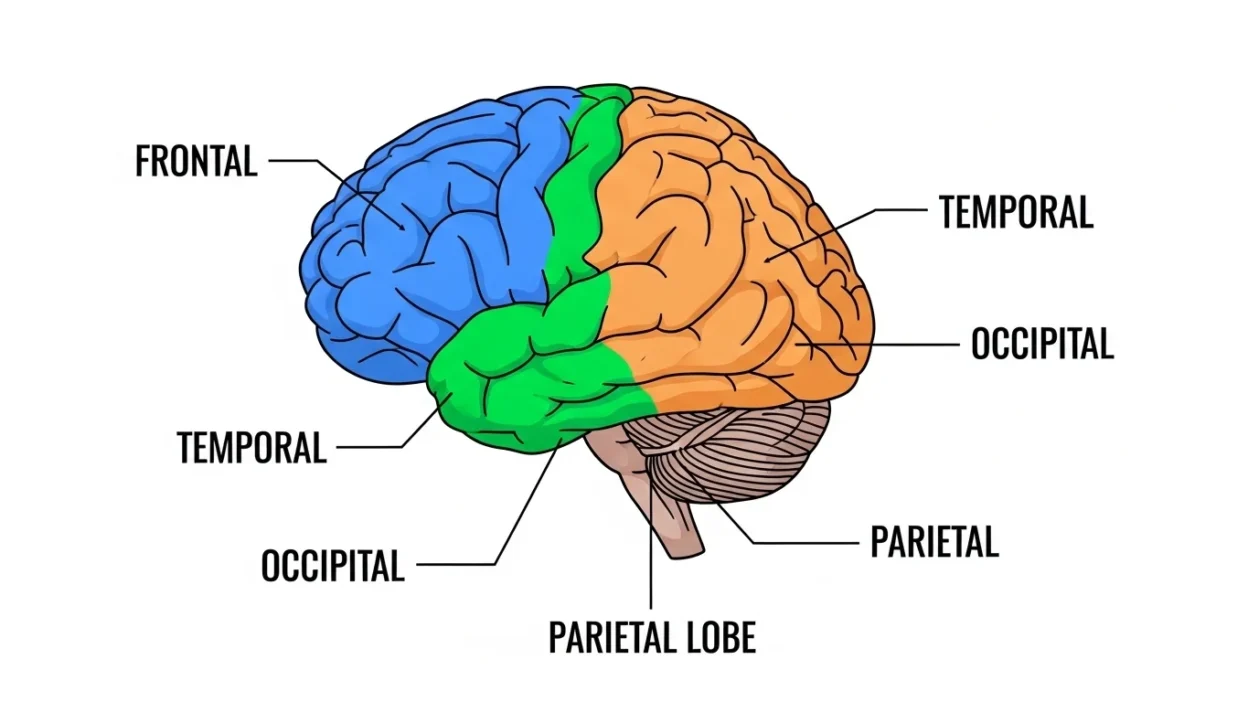
the parietal lobe is one of the four main sections of the human brain. the name comes from the latin word for wall because this part sits near the upper middle area of the brain.
in simple language the parietal lobe acts like the brain’s sensory interpreter. it receives information from the body such as touch pressure temperature and pain. it also helps your brain understand position distance and movement.
for example when you feel the warmth of a cup of tea or know where your hand is without looking the parietal lobe is working behind the scenes.
scientists and teachers often explain this brain region when talking about how humans sense the world and move safely through space.
example sentence
the biology teacher explained that the parietal lobe helps the brain understand touch and body position.
bold summary: the parietal lobe is a brain region that processes touch sensations and helps you understand spatial awareness.
where the term parietal lobe is commonly used
even though the parietal lobe is a scientific term it shows up in many online conversations today.
you may see it in
science videos and educational social media posts
online forums about psychology or neuroscience
school group chats discussing biology homework
health blogs explaining brain injuries
documentaries and learning channels
the tone when people mention the parietal lobe is usually neutral and educational. it is not slang and it is rarely used casually in everyday jokes. most of the time people use it to explain how the brain works.
realistic conversation examples
here are some natural lowercase chat style examples of how people might talk about the parietal lobe online.
- i just learned the parietal lobe helps with touch
- wait is the parietal lobe the part that understands space
- this science video about the parietal lobe was actually interesting
- brain injuries in the parietal lobe can affect sensation
- our biology class talked about the parietal lobe today
- the parietal lobe helps you know where your hand is
- i never realized the parietal lobe processes touch signals
- someone explained the parietal lobe in a psychology thread
- studying the parietal lobe makes brain science easier to understand
when to use and when not to use the term parietal lobe
since this term is related to science it works best in educational contexts.
do use parietal lobe when
talking about brain science or biology
explaining how touch and spatial awareness work
discussing health or neurological topics
studying psychology or neuroscience
do not use parietal lobe when
trying to make simple jokes
talking about everyday topics unrelated to science
using slang in casual conversations
comparison table
| context | example phrase | why it works or does not work |
| science discussion | the parietal lobe processes touch signals | works because the topic is educational |
| classroom chat | we studied the parietal lobe today | works in a learning environment |
| casual joke | my parietal lobe is tired today | confusing and not very clear |
| random conversation | the parietal lobe solved everything | does not make sense in everyday talk |
related brain parts you might hear about
when people learn about the parietal lobe they usually learn about other brain regions too. each part has a different role.
| brain part | meaning | when it is discussed |
| frontal lobe | controls planning thinking and decision making | discussed in behavior and problem solving topics |
| temporal lobe | processes sound language and memory | mentioned in hearing and memory discussions |
| occipital lobe | handles vision and visual information | discussed when explaining eyesight |
| cerebellum | controls balance and coordination | used in movement and motor control discussions |
| hippocampus | helps create and store memories | mentioned in learning and memory topics |
all these brain parts work together to help the body sense think move and remember.
faqs about what does the parietal lobe do
where is the parietal lobe located
it is located near the top middle area of the brain behind the frontal lobe.
what senses does the parietal lobe process
it mainly processes touch pressure pain and temperature.
does the parietal lobe help with movement
it helps guide movement by telling the brain where body parts are located.
what happens if the parietal lobe is damaged
people may have trouble recognizing objects feeling sensations or understanding spatial positions.
do students learn about the parietal lobe in school
yes it is commonly taught in biology psychology and neuroscience classes.
why is spatial awareness important
it helps people understand distance location and movement which is important for everyday activities.
final thought
understanding what does the parietal lobe do helps make the complex human brain easier to understand. this important brain region processes touch sensations and helps you understand the position of your body in space.
without it simple actions like picking up objects walking safely or feeling textures would be much harder. even though the name sounds technical learning about the parietal lobe shows how incredible the brain really is and how every part works together to help us experience the world.