Have you ever been scrolling through your phone, chatting with a friend, or reading comments online and suddenly seen someone mention “thrush”? Maybe it popped up in a parenting group, a health forum, or even a late night Google search when something felt “off.”
The word sounds a little strange, and if you’ve never seen it before, it can be confusing and even a bit worrying. Many people hear the term first through a text, DM, or post and immediately ask the same thing: what does thrush look like? This guide breaks it down in a friendly, easy way so you know exactly what people mean when they talk about thrush.
Quick Answer:
Thrush usually looks like white, creamy patches in the mouth or thick white discharge and redness in intimate areas, often with soreness or itching.
What Does Thrush Mean (Plain English Explanation)
Thrush is not a texting abbreviation or slang. It’s the common name for a yeast infection, caused by a fungus called Candida.
In simple terms, thrush happens when this yeast grows too much in one area of the body. A small amount of Candida normally lives on our skin and inside us, but when it overgrows, it causes visible changes and discomfort.
People use the word “thrush” because it’s short, familiar, and widely understood in everyday health conversations.
Example sentence:
“i think my baby has thrush there are white patches in her mouth.”
Bold summary: Thrush is a yeast infection that causes visible white patches, redness, and soreness depending on where it appears.
What Does Thrush Look Like in Different Parts of the Body?
Thrush can appear in different places, and it doesn’t always look the same.
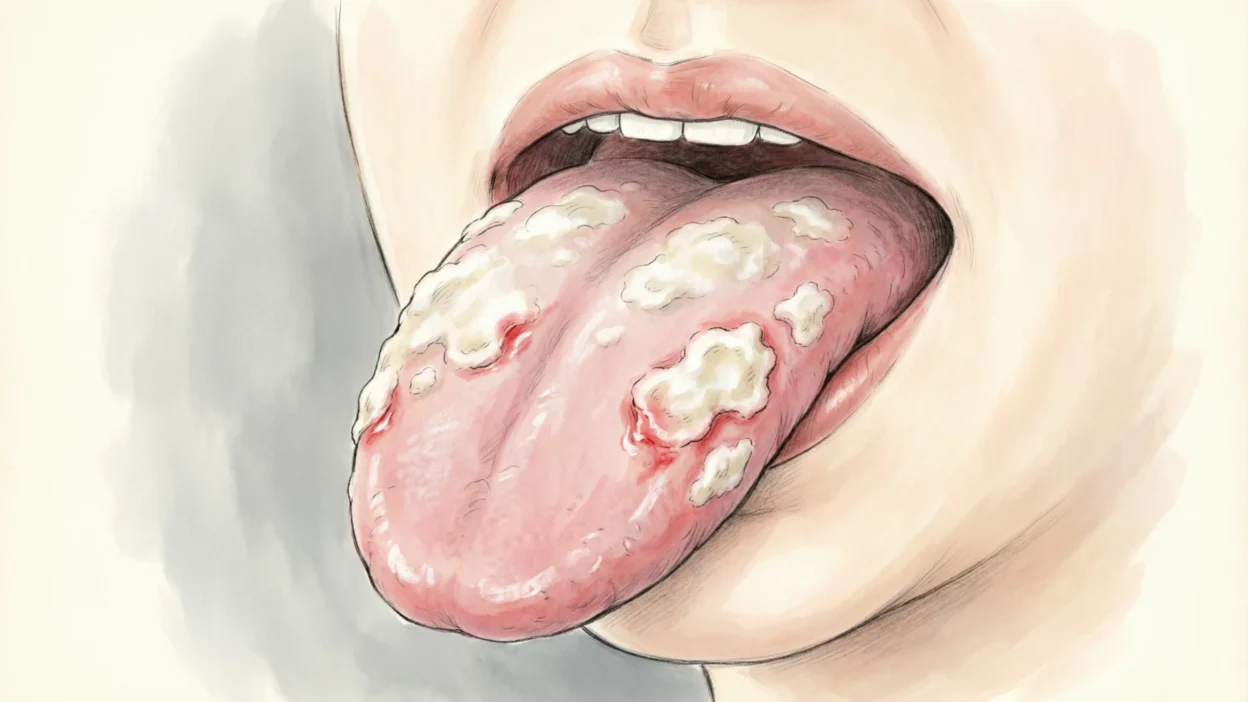
Oral Thrush (Mouth and Tongue)
This is one of the most common types.
- White or cream colored patches on the tongue, inner cheeks, gums, or lips
- Patches may look like cottage cheese
- Red, sore skin underneath if wiped
- Cracked corners of the mouth
- Sometimes a cottony feeling or loss of taste
Vaginal Thrush
Common in women and often discussed in online chats and forums.
- Thick, white discharge (often described as cottage cheese like)
- Redness and swelling around the vaginal opening
- Itching or burning
- Soreness during urination or intimacy
Penile Thrush
Often overlooked but common.
- Red rash or shiny skin on the tip
- White discharge or patches
- Itching or irritation
- Unpleasant smell in some cases
Skin Thrush
Seen in warm, moist areas.
- Red, itchy rash
- Small white or red spots around the rash
- Common under breasts, armpits, groin, or between skin folds
Where the Term “Thrush” Is Commonly Used
Unlike social media slang, thrush is used in health related conversations.
You’ll often see it in:
- Text messages between friends or partners
- Parenting chats and mom groups
- Online health forums and comment sections
- Doctor or pharmacy conversations
- Search queries like “what does thrush look like”
Tone: Mostly neutral and informal, especially in texts and DMs. It becomes more formal in medical settings.
Realistic Conversation Examples (How People Talk About Thrush Online)
Here are natural, modern chat style examples you might see online:
- “does oral thrush look like white spots on the tongue?”
- “i think i’ve got thrush again, the itching is unreal”
- “my baby has white patches in her mouth could it be thrush?”
- “is thrush supposed to hurt or just itch?”
- “anyone else get thrush after antibiotics?”
- “google says thrush but i’m not 100% sure”
- “the redness went down after treatment, so yeah it was thrush”
- “what does thrush look like compared to an sti?”
When to Use and When Not to Use the Term
✅ Do Use “Thrush” When:
- Talking about yeast infections
- Describing white patches, itching, or redness
- Asking for advice in health forums
- Speaking casually with friends or family
- Searching symptoms online
❌ Don’t Use “Thrush” When:
- Guessing without symptoms
- Using it as slang or a joke
- Replacing a medical diagnosis
- Describing unrelated rashes or infections
Quick Comparison Table
| Context | Example Phrase | Why It Works / Doesn’t |
| health chat | “what does thrush look like?” | clear and accurate |
| parenting group | “baby has oral thrush” | common usage |
| joking slang | “that post is thrush” | incorrect meaning |
| medical visit | “i think i have thrush” | acceptable starting point |
Similar Terms and Alternatives You Might See
People don’t always say “thrush.” Here are related terms:
- Yeast infection More general, often used in the US
- Candida Medical name for the fungus
- Oral candidiasis Clinical term for oral thrush
- Vaginal yeast infection Clear and specific
- Fungal rash Broader term, less specific
Use thrush in casual chats and yeast infection when you want clarity with a wider audience.
FAQs About What Thrush Looks Like
1. Is thrush always white?
Mostly, yes but redness and irritation often appear around the white areas.
2. Can thrush look different in adults and babies?
Yes. Babies usually get oral thrush with clear white patches, while adults may have soreness too.
3. Is thrush the same as an STI?
No. Thrush is not an STI, though it can affect intimate areas.
4. Can thrush go away on its own?
Mild cases sometimes do, but treatment helps it clear faster.
5. Is thrush common?
Very common. Many people experience it at least once.
6. Can men get thrush?
Yes, men can get thrush, especially after antibiotics.
7. Why do people search “what does thrush look like”?
Because symptoms can feel confusing, and people want visual reassurance.
Final Thought
Understanding what thrush looks like helps remove fear and confusion. If it’s white patches in the mouth, redness on the skin, or itching in intimate areas, knowing the signs makes it easier to talk about and treat.
Thrush isn’t slang, a trend, or something rare it’s a common health issue people discuss every day in texts, chats, and online forums. The more clearly we understand it, the easier it is to take the right next step.